Birthing the Sun - Forest, Herbs and Roses
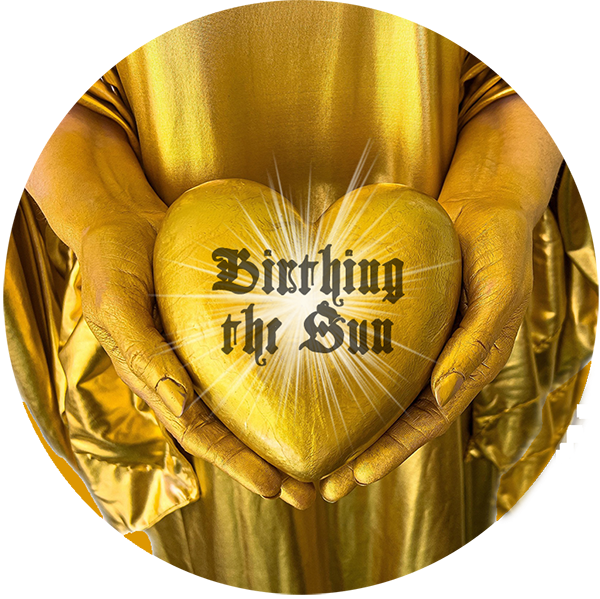

Nașterea Soarelui -Birthing the Sun
from Esprit de la Nature
An incense blended to uplift the spirit and open the heart during the long nights of winter.
Coniferous and herbal greens, warm woods, earthy bread aromas with a hint of roses
Ingredients: All ingredients mindfully wildcrafted Balsam Fir resin, resinated Balsam Fir bark, Balsam Fir Needles, Oak wood, Pines resins, Oak wood, Juniper wood, Juniper needles and Juniper berries, White Cedar leaves, Mugwort leaves and flowers, Yarrow leaves and flowers, Larch needles, Tree Mosses, Sweet Clover all bound with rose hips soaked in Dandelion wine and organic Honey. Packed with salted Rose petals and Balsam Fir needles.
I have a memory so distant that it appears in my mind’s eye like a snow ghost drifting quickly by in a dark, winter storm. In this memory, the house where I grew up smells of baked goods and a large Balsam Fir that my father took me to harvest with him in the forest. I am sitting in a high-chair watching my great-grandmother make cookies, cakes and bread at an enormous table set up just for the occasion. Dressed in a cotton house dress and sweater, covered by an apron she made and embroidered herself and wearing sturdy shoes, Granny is small and bow legged, her grey hair braided and pinned to the top of her head. In her late 90’s, she seems impossibly old to me. Flour is everywhere. Granny gives me a small, crescent-shaped cookie, covered with white powdered sugar which makes the cookie shine like the moon. The cookie immediately melts in my mouth tasting of butter, crumbs and almonds. I don’t know it, but I will never taste such delicious cookies and cakes again in my life. Granny places a thin layer of dough on the tray of my high chair. She takes my right hand and places it on the smooth dough. She speaks to me softly in English with an Eastern European accent I can barely understand. Asking me to spread my fingers she then outlines my hand with a point of a knife. She repeats the ritual with my left hand. She cuts out the shapes of my hands then places the forms near the beautiful rose flowers and star patterns that she has already created out of the golden dough and smiles back at me. That’s all I remember. Granny died at 101 years old. My grandmother, Granny’s daughter, eager to assimilate into North American culture, never passed on any of Granny’s old countries ways to me or any of her daughters.
_Bonnie,_Grandma_copy.jpg)
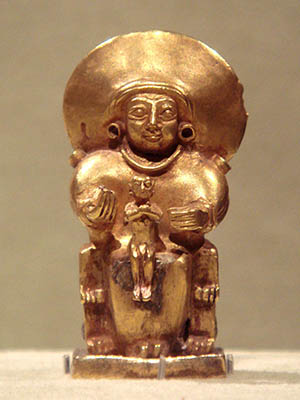
It was not until years later that I realized that Granny was making a traditional Sun bread. She planned to decorate the top with the dough forms of my hands, the roses and stars. There is an ancient history of women baking breads and cakes to honor Sun Goddesses. In the earliest Cuneiform tablets, from more than 5000 years ago, there is written evidence of this activity. As archaeologist Marija Gumbutas posited, around the Black Sea, where my ancestors come from, there is an ancient history of Sun goddesses. The best documented is the Hittite sun goddess named Eštan. The myths around the Solstice likely began as a female-centric solar-birth story, with a goddess birthing the sun. Following the rhythms of the Moon and a woman’s Lunar cycle it was sure to return. Over time, Indo-European patriarchal structures, local ritual reinterpretation, and Christian overlay recast the narrative making the Sun male with the possibility that the Sun might not return without intervention. Solstice stories and traditions became confusing, and sometimes nonsensical, as the layers of beliefs mounted. Yet, through the millennia, woman continued to bake braided, circular breads, rich with meaning, to express golden, solar, feminine energy.
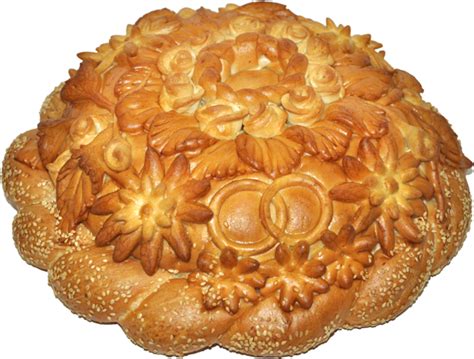
There is a story from Granny’s home land, Romania, that is an example of how women managed to keep the feminine aspect of the Solstice alive even under heavy pressure from the Christian Church. In the tale, Crăciun, the Romanian Santa Claus, had a wife whose name was Crăciuneasa. Crăciuneasa literally means the female Craciun which is an indication of belief. Crăciun and Crăciuneasa likely echo an older Indo-European solar couple or divine pair.
“Craciun was a very wealthy but a cruel and cold-hearted man. Crăciuneasa and her three daughters lived in fear of him and his quick temper. One night, the Virgin Mary and Saint Joseph came to their home, seeking shelter. The Virgin, heavily pregnant, pleaded for a place to rest and give birth.
Craciun refused her, considering her “shameful,” and offered no shelter. He left the house to go to attend to some business. However, his wife, Crăciuneasa, despite fearing her husband’s anger, moved with compassion, welcomed Mary, and helped her give birth in the stable.
When Crăciun returned home and learned that his wife had hidden and helped Mary, he became furious. As punishment, he cruelly cut off Crăciuneasa’s hands.
Mary, learning what had happened caused Crăciuneasa’s hands to regrow, not just her old hands, but new ones that were “golden” or shining, more beautiful than before.
Seeing this miracle, Crăciun repented for his cruelty. He prayed to God, was baptized, becoming the first Christian. As a sign of gratitude, Crăciuneasa distributed his wealth to the poor. This is said to be the origin of the tradition of children receiving gifts on Christmas Eve.”
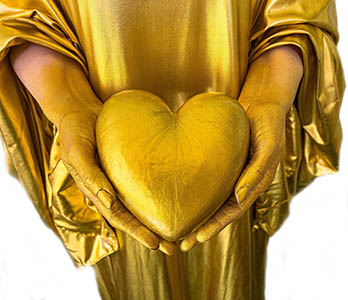
My memory……Golden hands on the golden Solstice bread. Crăciuneasa’s healing hands became reflectors of light, power, and creative energy. A powerful solar midwife and divine feminine whose symbol was the rose, sheaves of grains and golden hands. Granny remembered.
Notes on some of the ingredients:
Balsam Fir: The classic winter and solstice tree as it does not easily loss its needles went brought inside. Aroma-therapeutically uplifting and purifying during even the darkest months.
Oak wood: The quintessential sacred tree of Old Europe. Putting another layer of meaning into the story of Crăciun and Crăciuneasa, The Pre-Christian meaning root of their names means “sacred oak”. Crăciun likely is originally the spirit of the Pagan sacred Oak. In many places in Old Europe, the trunk of an Oak was brought into the house at Solstice to influence the return of the sun. The log was burnt a little every evening until the spring The ashes were kept and placed around the roots of the trees and in the grain fields as spiritual and physical fertilizer.
Roses: The flower of the sacred feminine. The flower between a woman’s legs during her menses and the wise womb blood of her later years. Powerful heart medicine.
Mugwort, Yarrow and Sweet Clover: Plants that are associated with midwifery protection and endurance, and. During winter, they are sometimes still placed in cradles or used for saining.
Juniper and Cedar: Traditional used in Europe as incense for purifying during the winter season.